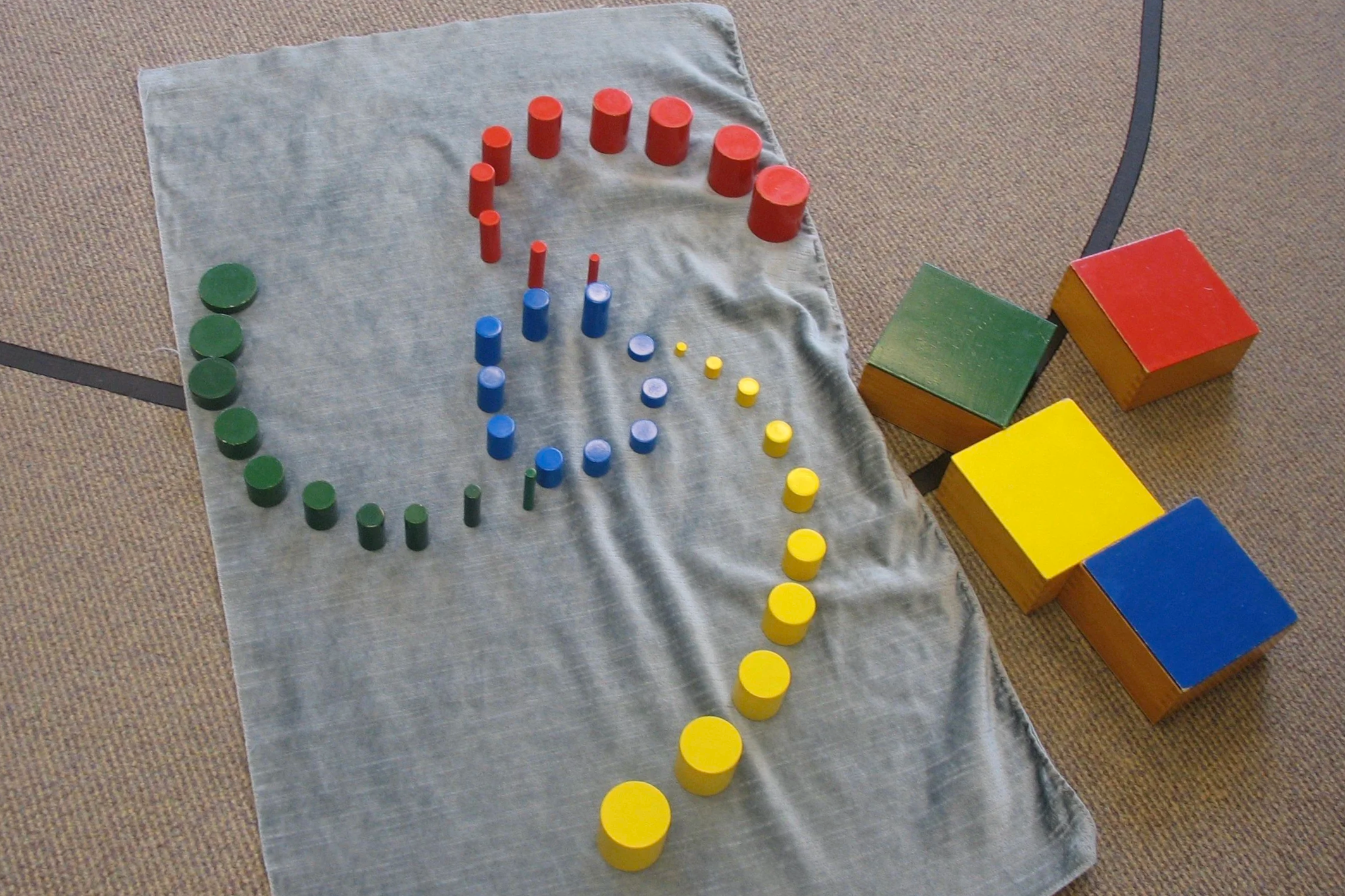
An education built around how children learn
Montessori isn't a brand of preschool, it's a research-backed approach to childhood development. Here's what it is, and why it matters long after your child leaves our classrooms.
Why Montessori?Dr. Maria Montessori observed something simple: young children concentrate deeply and learn best when they choose purposeful, hands-on work not when they're told to sit and absorb.
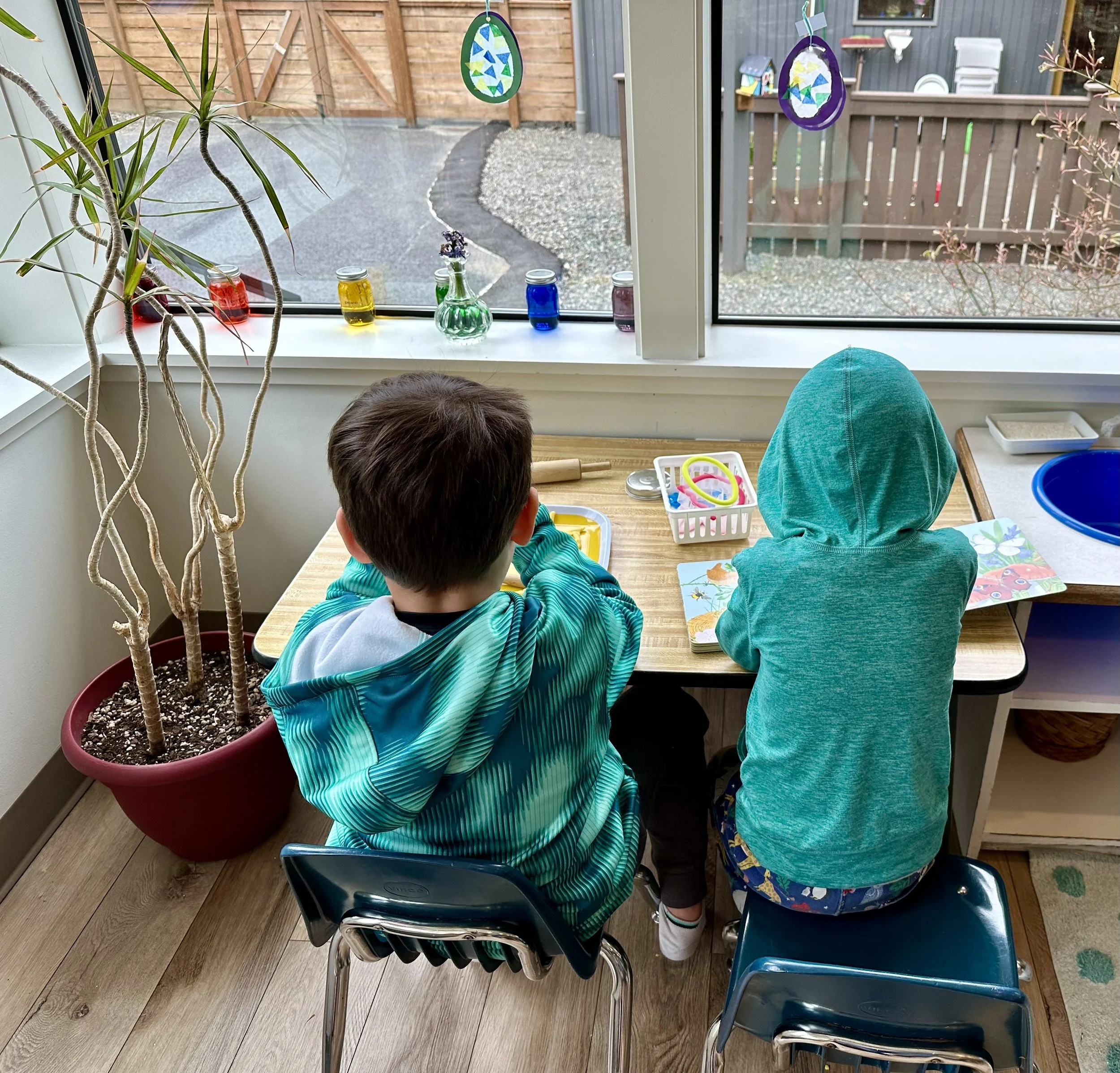
A Montessori classroom is a “prepared environment”: every material on the shelf has been designed to teach one concept clearly, and children are free to select their own work during long, uninterrupted blocks of time.
“Guiding” rather than lecturing is the whole job. Teachers observe closely, offer individual and small-group lessons, and step back once a child is engaged trusting that real concentration, not compliance, is what builds understanding.
Classrooms are also mixed-age, typically spanning a three-year cycle. Younger children learn by watching older ones; older children deepen their own understanding by teaching what they've mastered. Nobody is bored waiting for the group, and nobody is rushed past a concept they need more time with.
A sample day at Creative Montessori-
Children arrive gradually, they play with our toys including dinosaurs, cars, dress-up, puppetry and the last 30 minutes they play outside on the playground.
-
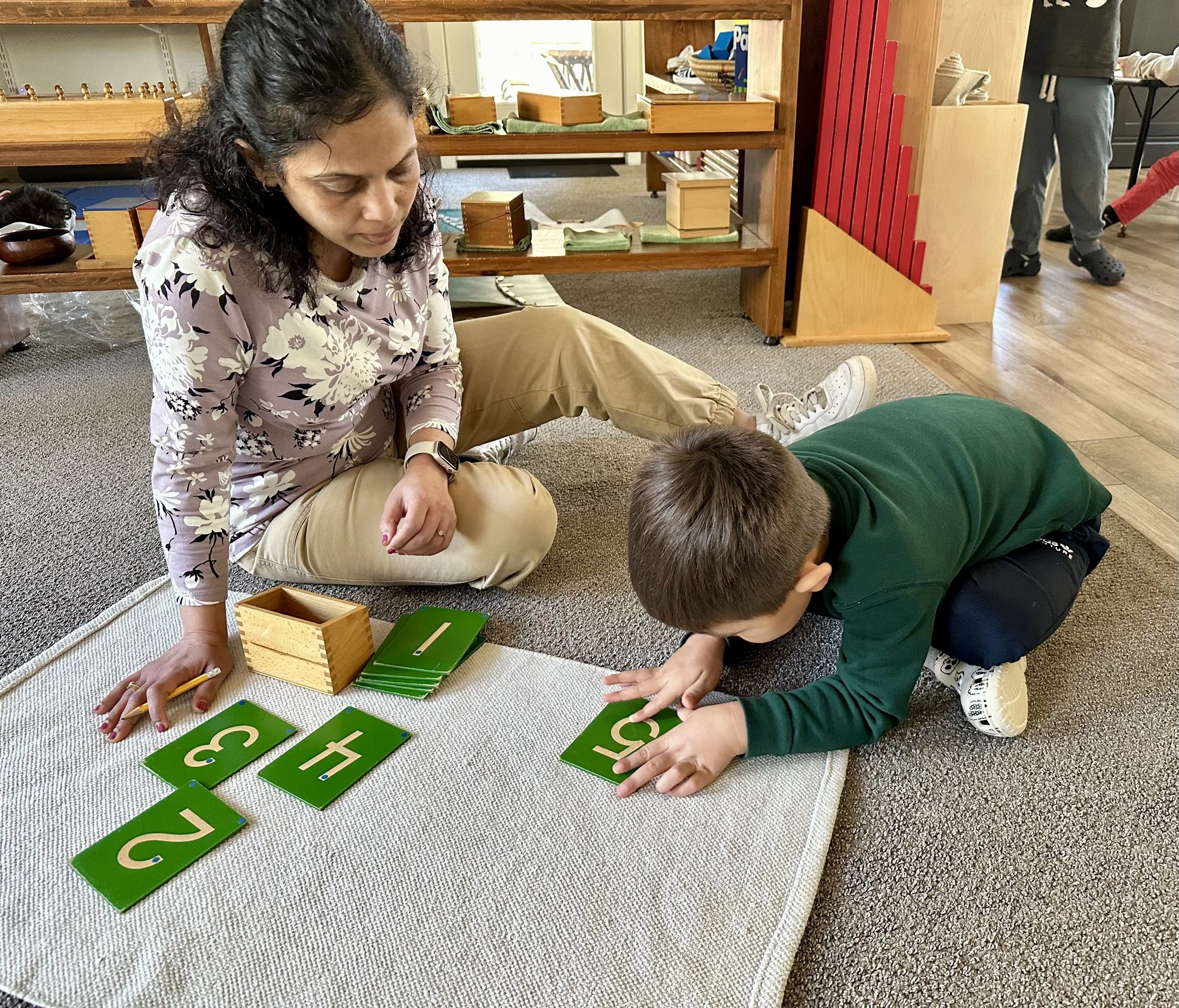
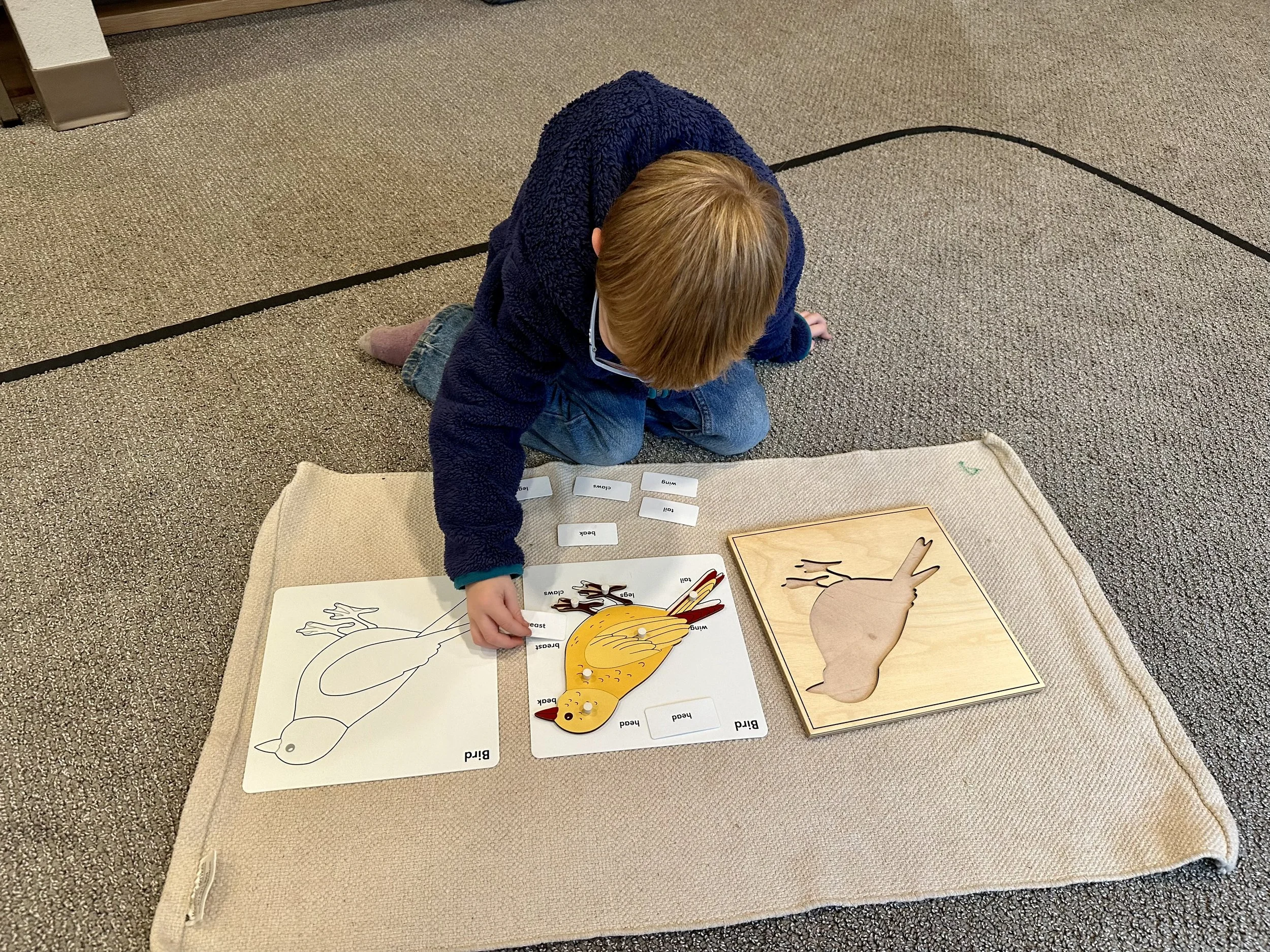
A long, uninterrupted block where children move freely around the classroom, choosing their own work from practical life, sensorial, language, or math area’s. The lead teacher will offer individual and small-group lessons throughout. Circle time happens in the last 15 minutes, children sing songs, share show and tells, and have classroom meetings to solve problems.
-
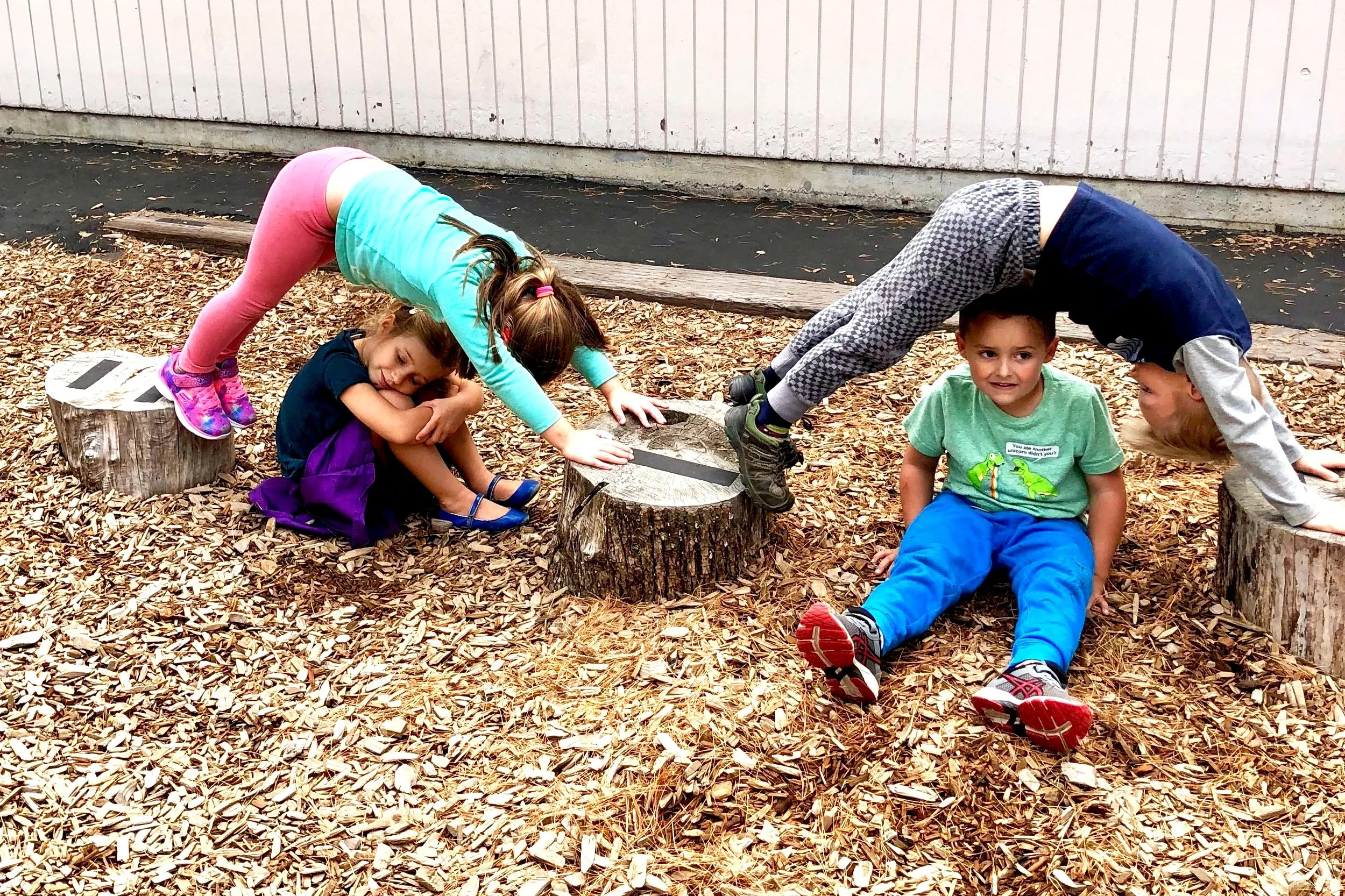
Children spend 30 minutes eating lunch and then have unstructured time outside, rain or shine.
If your child naps, they nap from 12pm - 2.30pm -
A long, uninterrupted block where children move freely around the classroom, choosing their own work from practical life, sensorial, language, or math area’s. The lead teacher will offer individual and small-group lessons throughout. Circle time happens in the last 15 minutes, children sing songs, share show and tells, and have classroom meetings to solve problems.
-
Free play, outdoor time, and gradual pickup as families arrive through the evening.
Why a Long Work Cycle?
Montessori research consistently points to one finding: children need long, uninterrupted stretches of time to reach real concentration. Breaking learning into 20-minute subject blocks means most children are just settling in when it's time to switch. Our schedule protects that block deliberately, even when it's tempting to fill it with more “activities.”
What Montessori Builds,Beyond Academics
Children dress themselves, prepare snacks, choose their work, and correct their own mistakes with self-checking materials, building confidence that isn't borrowed from adult praise.
Genuine independence
Because children choose their own work, learning becomes something they do for its own sake not a performance for grades or stickers.
Intrinsic love of learning
Real, sustained focus
Uninterrupted work cycles of up to three hours let children enter deep concentration the same capacity for focus that serves them well into adulthood.
Strong social-emotional skills
Mixed-age classrooms, grace-and-courtesy lessons, and conflict-resolution practice build empathy and communication daily, not through a once-a-week program.
“Never help a child with a task at which he feels he can succeed.”
Don’t Take Our Word For It …
The experts agree, Montessori isn't just a philosophy, it's one of the most studied approaches to early childhood education in the world. The results speak for themselves.
Montessori children start kindergarten ahead
The first-ever national randomized controlled trial of Montessori preschool tracked children across nationwide programs found that By kindergarten, Montessori children showed significantly stronger reading, memory, executive function, and social understanding than peers in conventional programs.
— Lillard et al., PNAS, 2025
The social skills that last a lifetime start here
A comprehensive review of 32 Montessori studies found consistent positive effects across all nine measures of academic achievement, social-emotional development, and wellbeing with benefits seen across income levels, race, and language backgrounds.
Experience Our Classroom
Book a tour, and come experience our Montessori classroom for yourself and see how it is genuinely different.